
Particle accelerators in energy and the environment
- Prateek Tailor and Salim Ahmed
- Nov 18, 2015
- 3 min read
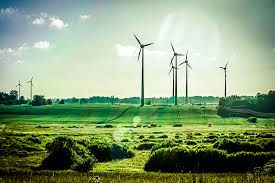
As we come to our next topic, one can expect that many possibilities open up with advances in particle physics and accelerator technology. Modern day methods of energy generation do not use particle accelerators. Using these new methods, North America would be able to stop importing foreign oil to burn fossil fuels to be more eco friendly.
At the moment, nuclear reactors use uranium as fuel for energy which has many down sides because of the nuclear waste produced. Uranium is also very limited on this planet which means that nuclear reactors will one day not be sustainable for the world. Seeing that uranium is a very limited resource and we have no way of making more, physicists have been working hard on creating new technologies which involves the use of thorium, an extremely abundant resource on the earth’s crust. Thorium is the most common radioactive element found naturally and has many attributes

which can come in handy in creating energy. It has been theorized that thorium can create much more energy than uranium fission.
Since thorium has different properties, conventional modern day nuclear reactors cannot be used to create energy from the thorium. A Subcritical reactor is needed for thorium, what this reactor does is use external neutrons to produce fission without hitting criticality. Neutrons are extracted from the spallation of a heavy nuclei by charged particles like protons through a particle accelerator. This is called an Accelerated-driven system (ADS), when a particle accelerator is paired with a reactor. The name of this specific reactor concept is called an Accelerator-driven subcritical reactor. A benefit to using a reactor that uses thorium would be that all waste products have a short life and is much better than uranium’s radioactive waste. The energy used in the accelerator would be overshadowed by the large amounts of energy created from the reactor running. The only problem which comes with this reactor is the price, it costs over 2 billion euros which turns out to be $2.14 billion US dollars. There is the Rubbia design invented by Nobel Prize winning physicist Carlo Rubbia and is working on making a thorium reactor. His designs propose that the reactors can be created underground and would not need a large facility for safety and security.
Believe it or not particle accelerators have both positive and negative impacts to society and the environment. Particle accelerators benefit the environment and diverse ecosystems by effectively cleaning out dirty water, sewage sludge, and air pollutants from smoke stacks. This gives creatures like birds and fish a clean healthy habitat to live in and helps preserve rare species from going extinct. Not only that but particle accelerators plays a huge role in treating cancer. Hospitals use particle accelerator technology to treat thousands of cancer patients per year, with fewer side effects than traditional treatments. Particle accelerators have helped humanity become that much closer to curing cancer.In addition, particle accelorators allow scientists to analyse protien structures quickly and accurately by using powerful x-ray beams from electromagnetic radiation of a synchrotron. This helps scientists to develop new drugs to help cure major diseases such as malaria. Even though particle accelerators may seem like the next best thing since the invention of the toaster but, like a coin there is always another side to the story. The two major problems with particle accelerators are that it is extremely dangerous because of the radiation it emits and the radioactive waste that comes as a bi-product of some of its applications. The radiation emitted from particle accelerators underground can affect the growth of vegetation and other living organisms that live near the accelerators location. In addition, the radiation emitted during an operation and the radioactive waste after the operation are toxic and lethal to humans if been exposed to enough radiation over a time span. This poses work safety issues as there is a possibility that the workers could become ill of radiation poisoning. Unfortunately, the radioactive waste is able to completely destroy ecosystems and habitats that happen to be near the landfill if the waste was not disposed of properly. Particle accelerators are very useful in today's day in age but, unfortunately nothing is perfect and using a particle accelerator comes with risks.

Comments